Walmart Inc. launches a combined membership bundle for Walmart+ and Sam’s Club Plus to capture market share and increase consumer loyalty

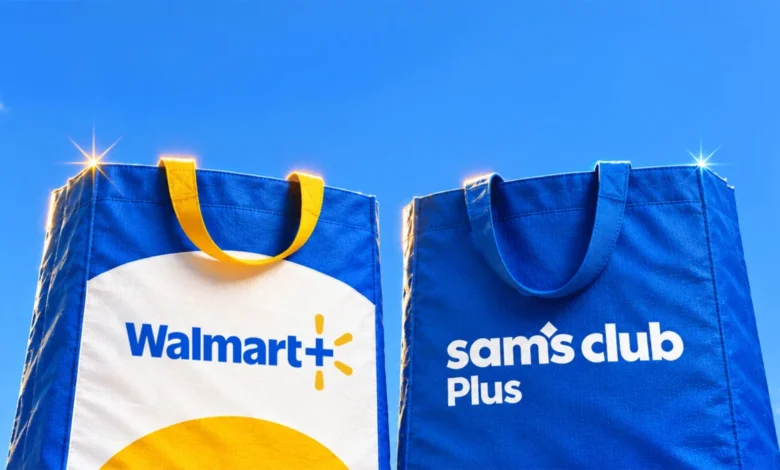
In a strategic maneuver designed to solidify its dominance in the retail landscape, Walmart Inc. has announced the launch of a unified membership bundle that integrates its two flagship subscription services: Walmart+ and Sam’s Club Plus. By offering these programs under a single $120 annual fee, the retail giant is positioning itself to capture a larger share of household spending while directly challenging competitors like Amazon Prime and the newly expanded Target Circle 360. This move represents a significant evolution in Walmart’s e-commerce strategy, reflecting a broader industry trend toward ecosystem-based loyalty programs that prioritize convenience, cost-savings, and cross-channel engagement.
The Strategic Rationale Behind the Bundle
The core objective of the new bundle is to eliminate friction between Walmart’s brick-and-mortar retail operations and its wholesale club division. Historically, the two programs operated as distinct entities, often requiring separate management and subscription fees. By consolidating them, Walmart is betting that the perceived value—saving customers nearly $100 annually—will act as a powerful incentive for existing Walmart+ users to adopt the warehouse club model, and for Sam’s Club members to increase their frequency of digital purchases at Walmart.com.
John Furner, president and CEO of Walmart, emphasized that the decision is rooted in a desire to raise the bar for what consumers expect from a subscription. "We’re giving people a reason to expect more from their memberships," Furner stated. "For $120 a year, we’re raising expectations for what a membership can deliver: more money in their pockets and more time to call their own."
Chronology of Membership Evolution
The path toward this unified offering has been marked by a series of incremental updates designed to bolster the utility of each program. Walmart+ was launched in 2020, initially serving as a direct response to the growth of Amazon Prime, focusing on free unlimited delivery from physical stores and fuel discounts. Over the following four years, Walmart consistently added "soft" benefits to the platform, such as video streaming partnerships with Paramount+ and Peacock, as well as food delivery partnerships.
Simultaneously, Sam’s Club Plus has focused on high-value, warehouse-centric perks, such as free shipping on online orders, early shopping hours, and significant discounts on pharmacy and optical services. The integration announced this year follows a pattern of iterative expansion. For instance, in 2024, the company integrated Burger King purchase savings into its membership perks, signaling an intent to extend the Walmart ecosystem into the fast-casual dining space. By mid-2026, Sam’s Club had already begun testing deeper health-centric integrations, such as partnerships with Weight Watchers, further diversifying the membership’s value proposition beyond simple retail goods.
Financial Structure and Accessibility
The pricing structure for the new bundle is tiered to accommodate different segments of the company’s existing subscriber base. For current Walmart+ annual subscribers, the transition involves an additional $22 annual fee to unlock the full suite of Sam’s Club Plus benefits. Conversely, existing Sam’s Club Plus members are being offered a more aggressive value proposition: the ability to add Walmart+ to their current subscription at no additional cost.
For non-members or standard Sam’s Club members who have not previously opted into the "Plus" tier, the company is positioning the $120 annual fee as a comprehensive entry point. By creating this tiered system, Walmart is attempting to minimize churn while incentivizing current members to move up the value chain. This pricing model also serves as a defensive measure against rising inflation, as it allows the retailer to highlight "locked-in" savings that are less susceptible to the volatility of individual product pricing.
Supporting Data and Market Positioning
Walmart currently holds the No. 2 spot in Digital Commerce 360’s Top 1000 Database, a comprehensive ranking of North America’s largest online retailers. Its position is bolstered by a robust omnichannel presence that few competitors can match. Furthermore, the company is ranked No. 37 in the AI Commerce Rankings, reflecting its significant investment in predictive analytics, supply chain automation, and personalized shopping experiences—tools that are essential for maintaining the high level of customer satisfaction required to support a premium membership program.
The shift toward a bundled service also addresses the "subscription fatigue" observed in the broader consumer market. With household budgets increasingly strained, consumers are becoming more selective about which recurring costs they retain. By bundling services, Walmart is effectively making itself "essential" rather than "discretionary." Industry analysts note that by integrating gas savings, pharmacy discounts, and streaming entertainment, Walmart creates a "sticky" ecosystem where the user finds it increasingly difficult to justify canceling the membership, as the cumulative loss of benefits would far outweigh the annual cost.
Competitive Landscape: The Battle for the Consumer
Walmart’s latest move is an overt attempt to reclaim territory from Amazon, which has long utilized the Prime membership as the gold standard for e-commerce loyalty. However, unlike Amazon, which relies heavily on digital content and logistics speed, Walmart’s advantage lies in its massive physical footprint. With thousands of locations across the United States, Walmart can offer services that Amazon cannot, such as immediate in-store pickup, fresh grocery fulfillment, and the warehouse-scale savings provided by Sam’s Club.
Target, another major competitor, has recently revamped its own loyalty program, Target Circle 360, to include same-day delivery and other perks. Walmart’s bundle acts as a pre-emptive strike in this "war of the memberships," forcing competitors to reassess their own value propositions. The inclusion of 26 distinct perks—including four exclusive to the bundle—demonstrates a high degree of complexity in the company’s loyalty strategy, aiming to cover every facet of the consumer’s daily life, from transportation and food to entertainment and healthcare.
Implications and Future Outlook
The success of this bundle will likely be measured by the rate of cross-pollination between the Walmart and Sam’s Club customer bases. If the integration leads to a measurable increase in the "share of wallet"—the percentage of a customer’s total spending that goes to a single retailer—the strategy will likely be replicated in other markets globally.
Moreover, the move has broader implications for the retail sector’s reliance on data. By consolidating membership accounts, Walmart gains a more holistic view of consumer behavior, allowing for more precise marketing, inventory management, and regional supply chain adjustments. As the company continues to leverage AI in its commerce operations, the data harvested from these combined memberships will become a primary driver of its future competitive advantage.
In conclusion, the bundling of Walmart+ and Sam’s Club Plus is not merely a promotional discount; it is a fundamental restructuring of how Walmart interacts with its most loyal customers. By simplifying the path to value and diversifying the range of services included, the company is building a defensive moat that leverages its unique scale, logistical prowess, and physical presence. As the retail sector continues to prioritize digital engagement and subscription-based revenue, Walmart’s latest initiative serves as a clear indication that the future of mass-market retail will be won through the strength of integrated, all-encompassing ecosystems.
Related posts: